Choose the fabric, not just the fiber name
Linen can mean a crisp table napkin, a loose curtain, a substantial upholstery cloth or softly handled bedding. Those fabrics share a fiber association but do not behave as one interchangeable material. Weave, weight, finishing and any blend all affect the result. Begin with the job you want the textile to perform, then assess the actual product. A beautiful curtain sample is not automatically suitable for a sofa, and a fabric that feels appealing in a small square may drape differently across a full bed. The name is a starting point for questions, not the answer to them.
Read the composition label carefully. A linen blend may be chosen for particular handling or performance characteristics, and a product described as linen-look may contain no linen at all. Neither fact alone determines whether it is a good choice. Ask what the fabric needs to do and whether the maker's information supports that use. Keep samples long enough to view them beside the room's existing materials. The texture that looks quietly irregular in a shop can become more pronounced against smooth upholstery or a glossy floor. That contrast may be welcome, but it is worth seeing before committing.
Decide how much irregularity you enjoy
Part of linen's appeal is that it often refuses a perfectly smooth appearance. Creases, subtle variation and a more relaxed drape can give a room an inhabited feeling. That does not mean every linen product behaves identically, or that you must enjoy every crease. Look at a larger sample or a finished item in use. If you prefer sharply pressed surfaces, consider whether you are willing to maintain them. Buying linen in the hope that you will become a person who enjoys ironing is a less reliable plan than choosing a fabric that fits your current habits.
A relaxed textile works especially well when another element gives the room structure. Linen curtains beside a clearly outlined cabinet, or a softly creased tablecloth on a simple table, can create a useful balance. If every surface is loose, rumpled and pale, the room may lose definition. You can retain the textile's natural character while keeping edges and proportions clear. Fold a throw simply, give curtains a considered length and avoid adding layers solely to make the room look casual. An easy atmosphere is more convincing when the objects are comfortable to use rather than carefully arranged to suggest carelessness.
Look at color through the weave
A textured fabric does not present color in the same way as a flat painted surface. Threads, shadows and variation in the weave can make a linen appear deeper or more complex than its color name suggests. Natural is particularly imprecise: it may indicate a pale oatmeal, a grayish tone or a warmer beige. Put the sample beside the actual wall and upholstery. A fabric you expected to be neutral may reveal an undertone that matters in the room, especially when it occupies a large area such as curtains or bedding.
Compare the sample in daylight and under the lamps used in the evening. Hold it in the direction and orientation of its intended use, allowing folds to form rather than keeping it stretched perfectly flat. If the textile will be lined, ask to see the effect with a suitable lining behind it. For a dyed product, read the care guidance and any information about expected variation or fading. Do not assume two separately purchased items with the same general color description will match. A small difference can be attractive when deliberate, but frustrating when it is discovered only after a full room order arrives.
Give curtains a real light test
Linen curtains can make daylight feel softer, but their transparency depends on the particular weave and construction. Hold a generous sample against the window and view it from both sides where practical. A fabric that looks substantial against a wall can become quite transparent when backlit. Decide whether the room needs privacy, light filtering, stronger light control or a combination. Those are separate requirements, and a decorative curtain may need an appropriate lining or another window treatment to meet them. Ask the curtain maker about the complete construction rather than expecting the face fabric to do every job.
Drape and length deserve equal attention. A lightweight open weave can hang differently from a heavier linen, and the fullness of the finished curtain changes the visual effect. Consider operation, cleaning, nearby furniture and the floor. Fabric pooling dramatically may look appealing in an image but catch dust, obstruct movement or be unsuitable around pets. Follow the maker's measurement and care advice, including any expected dimensional behavior. Keep curtains away from inappropriate heat sources and make sure fittings suit the load. The most enjoyable linen curtain is one whose softness is supported by a practical, correctly specified installation.
Evaluate upholstery beyond its relaxed appearance
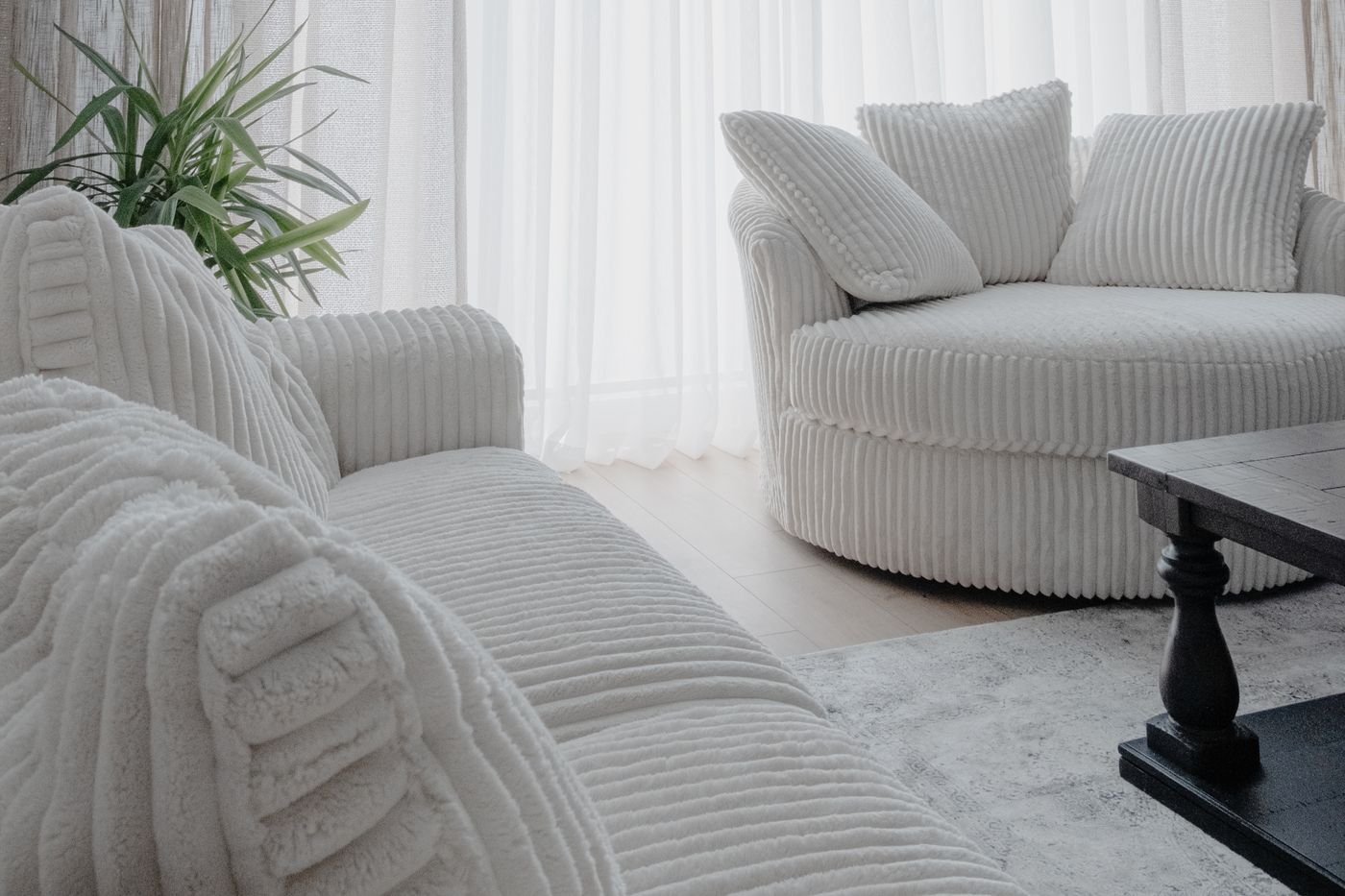
For a sofa or chair, choose a fabric explicitly suitable for upholstery and the intended level of use. Fiber content alone does not establish durability, stain behavior or resistance to snagging. Ask the supplier about the actual fabric's performance information, care requirements and compatibility with the furniture construction. Inspect the weave closely if pets, jewelry or rough clothing are part of ordinary use. A loose structure that feels attractive in a sample may be inconvenient on the household's busiest seat. A linen blend or another textile may provide the look and maintenance balance you prefer.
Consider the cover as a complete design. Loose covers, fitted upholstery, piping and cushion construction all affect the final appearance. A removable cover is not necessarily suitable for home washing; confirm the label and the maker's instructions before relying on that possibility. Ask how replacement covers or future repairs are handled if those options matter to you. On a large sofa, the fabric's crease and shadow pattern will be much more visible than on a small accent chair. If you are uncertain, introduce linen through a smaller useful piece first rather than committing the room's main seat to an untested expectation.
Choose bedding by touch and routine
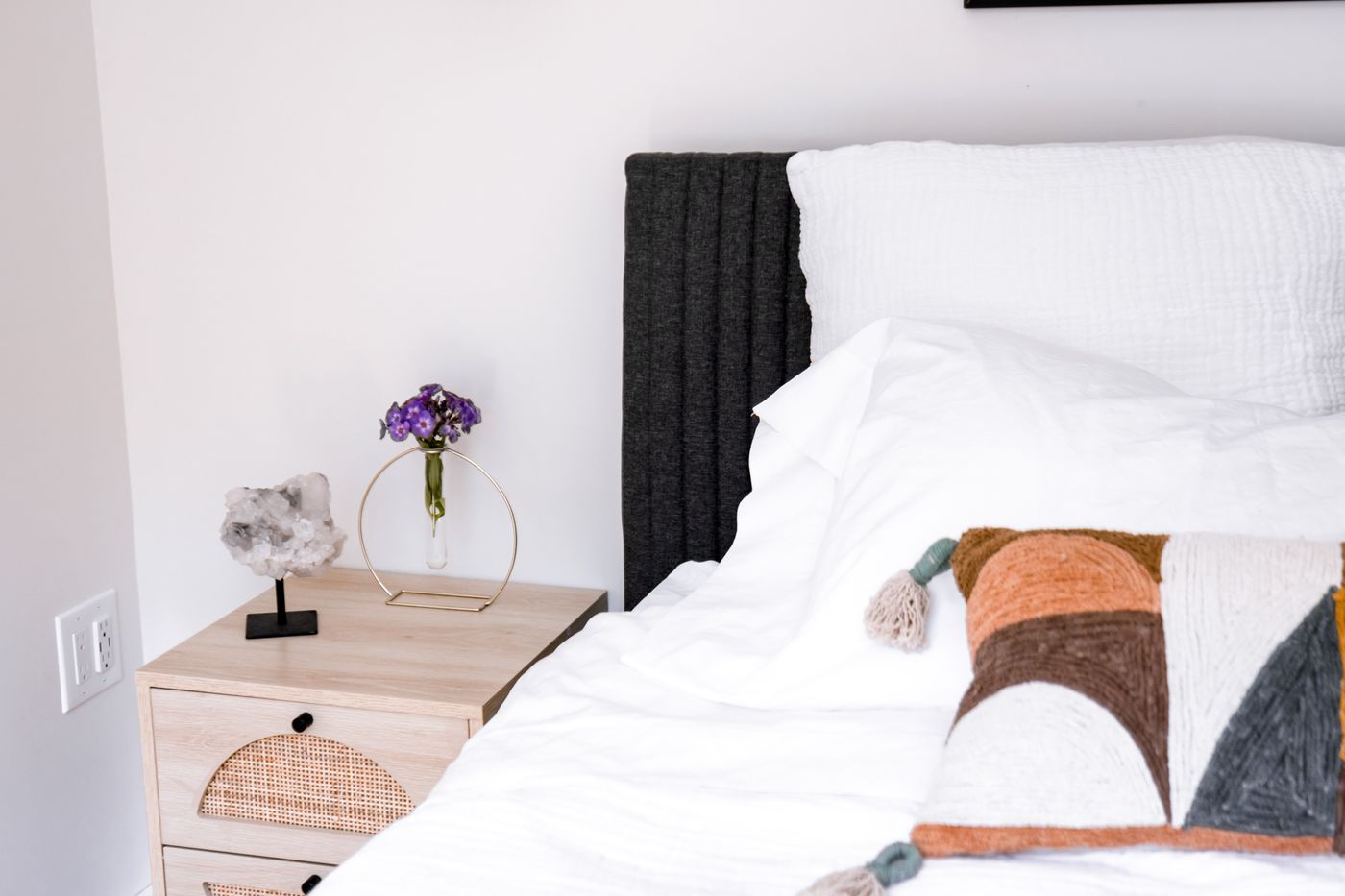
Bedding is experienced at close range, so touch deserves more authority than the room photograph. Feel the specific product if possible and consider the seams, closures and weight as well as the broad fabric surface. Some people enjoy a more textured hand; others prefer something smoother. Avoid treating one preference as more authentic or more luxurious. A useful bed is comfortable for the person sleeping in it. Ask about the product's care and return conditions before making a substantial purchase, particularly if you have only seen a small styled image online.
Think about the entire bedding routine: washing capacity, drying space, frequency of changes and where spare sets will be stored. Follow the care label rather than general advice for all linen. Check dimensions and any stated shrinkage allowance so the finished fit makes sense for the mattress, duvet and pillows. A relaxed appearance can reduce the pressure to press everything perfectly, but it does not remove the need for appropriate cleaning and drying. Keep the color scheme simple enough that replacement pieces can relate without requiring an exact match. Bedding should be easy to live with on an ordinary laundry day.
Make table linen compatible with the meal
A linen tablecloth or set of napkins can make a simple meal feel considered. Choose the size, weave and care requirements around actual use. A delicate decorative cloth may be enjoyable occasionally but unsuitable for a frequently used family table. Read the instructions for handling spills and laundering, and do not assume a fabric layer protects the table from heat or moisture. Use compatible surface protection where the furniture maker requires it. The linen contributes touch and appearance; it does not replace trivets, coasters or appropriate care for the surface beneath.
A small collection used often is easier to manage than several elaborate seasonal sets. Plain napkins can relate to varied dishes, while a subtle stripe can add enough pattern to a quiet table. Test how the cloth sits when chairs are pulled in and how far it overhangs the edges. Avoid a length that catches knees or creates an easy accidental pull. If pressing is part of the look you want, include that work in the decision. If you prefer visible creases, keep the cloth clean and simply arranged so the relaxed finish reads as a choice rather than neglect.
Let care and storage complete the choice
Keep the product-specific instructions with the item or in a small household care record. Washing temperature, detergent guidance, drying method and ironing advice can differ between products, especially when fabrics are dyed, blended, lined or constructed with trims. Do not generalize from one successful wash to every linen object in the home. Treat uncertain stains according to the maker's advice and seek suitable professional help for valuable or delicate pieces. Repeated improvised treatments can change color or texture. The best routine is the one that preserves the actual fabric without making its use feel burdensome.
Store linen clean and properly dry in an appropriate space, avoiding damp and unnecessary compression of delicate items. Keep frequently used pieces accessible so they remain part of daily life rather than becoming special objects reserved for an imagined occasion. If a product's care demands consistently discourage you from using it, that is useful information for the next purchase. Linen is not a shortcut to a particular lifestyle. It is a varied family of textiles that can add softness, texture and character when thoughtfully chosen. Select the pieces whose touch, behavior and upkeep suit the way your home already works.
Take it home
- Check composition, intended use and product-specific care labels.
- Test curtain opacity against a real window.
- Choose upholstery through performance and construction, not fiber name alone.
- Decide whether the creases and laundry routine suit your preferences.