Give the room two clear modes
A spare room can become the place where unfinished tasks go to wait. A desk, exercise equipment, old bedding, and boxes gradually gather around a bed that is technically available but difficult to use. Visitors may be welcome, yet preparing for them requires an exhausting rescue operation. The solution is not necessarily a larger room. It is a clearer agreement about what the room does.
Choose one main everyday purpose and one guest arrangement. A room that acts as an office between visits has different needs from one used for sewing or quiet reading. Be honest about the frequency of both activities. If guests stay twice a year, the room should still support the household during the other months. If visitors arrive regularly, the sleeping arrangement deserves more permanent space and less complicated conversion.
Decide how much transformation is reasonable
Some furniture promises several uses but demands considerable effort to change between them. A folding bed may require the desk to move. A sofa bed may open only after a heavy table is carried elsewhere. Consider who will perform the changeover and whether the necessary lifting or rearranging is realistic.
Write the sequence down before buying anything. Where do the everyday objects go? Where is the bedding stored? Can the bed be opened while the room door remains usable? A good dual-purpose room changes mode with a small number of predictable steps. If the process depends on filling another room with displaced furniture, the flexibility is less convincing than it first appears. Test the full arrangement rather than the main convertible item alone.
Choose the bed for actual sleep
A daybed, sofa bed, or conventional bed can all work, but their comfort and convenience vary by model and user. Read dimensions carefully, including the fully open size and mattress details. Sit and lie on the furniture where possible. A piece that is comfortable as a sofa may feel very different when opened for sleeping.
Consider the likely guests without assuming everyone has the same mobility or preferences. Low mattresses, narrow access, and difficult mechanisms may be unsuitable for some people. Follow product instructions and weight limits. If a fixed bed is used, do not apologize for the space it occupies; arrange the everyday role around it intelligently. A comfortable bed with a compact work surface can be more successful than an elaborate mechanism that compromises both functions.
Leave somewhere for a suitcase
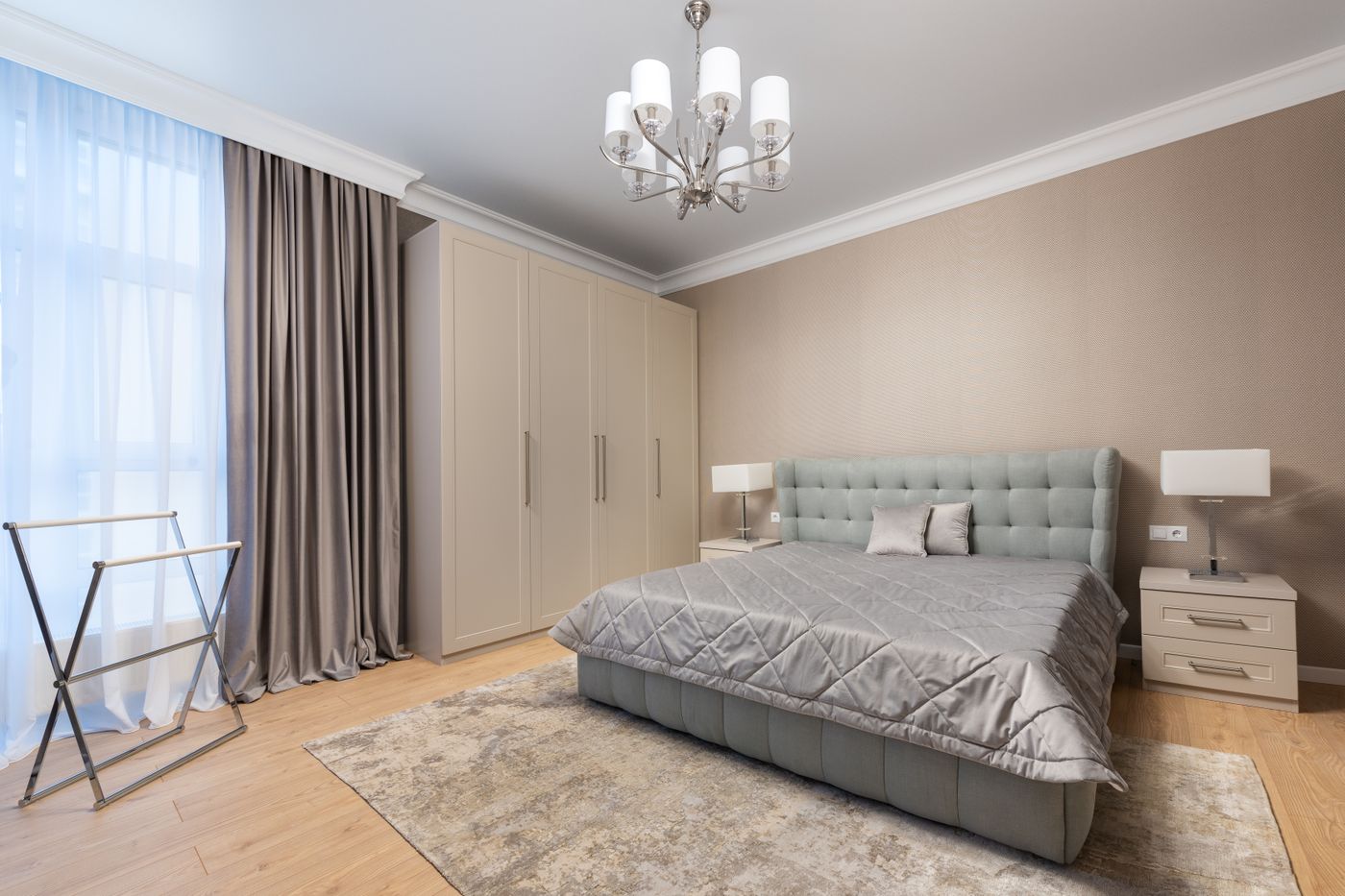
A visitor arrives with belongings, not just a need for a mattress. Provide a clear place for a bag or suitcase that does not block the route to the door. A folding luggage stand can be useful when stored safely between visits, but a cleared bench or sturdy suitable surface may already do the job.
Think about the way the suitcase opens. A hard case that folds into two halves occupies more space than a small soft bag. If it must sit on the floor, leave enough room to reach the bed without stepping over it. An empty patch of floor is not wasted space in a guest room. It allows the guest to settle in without reorganizing your possessions before they can unpack.
Offer genuinely empty storage
A wardrobe filled with household coats does not become guest storage because a few hangers have been added to the front. Clear a defined area. A short rail, several suitable hangers, and an empty drawer can be enough for a short stay. The important part is that the space is clearly available and easy to use.
Avoid asking visitors to infer which cupboard doors they may open. Show them the storage when they arrive or keep the available section obvious. If the room is also an office, put private papers and personal items elsewhere or in secure storage before the visit. This protects both the household and the guest from awkwardness. The room should feel prepared, not temporarily abandoned in the middle of someone else's routine.
Make the bedside area complete
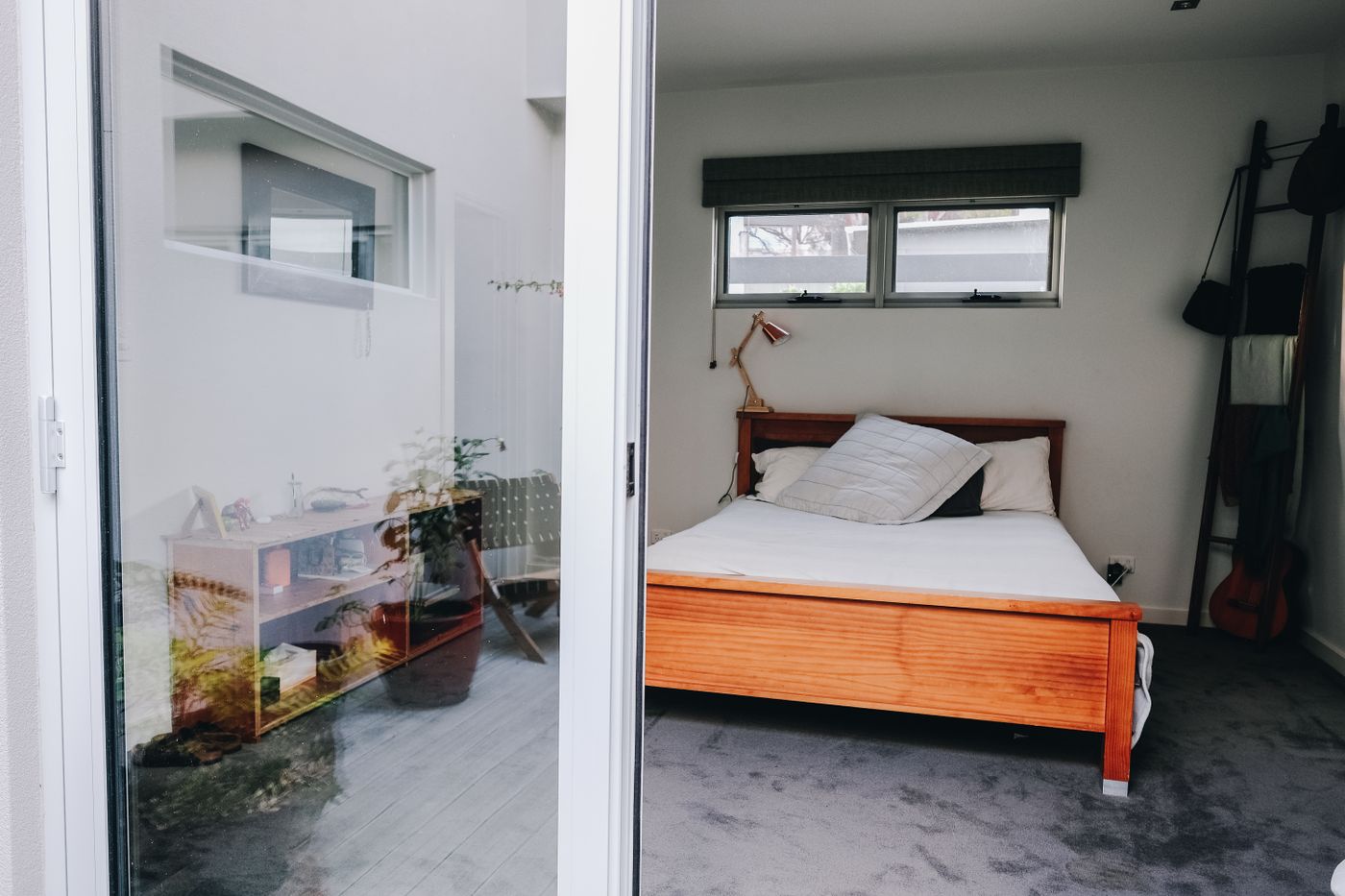
Each sleeping position benefits from a reachable surface and a usable light. A guest should not need to balance glasses on a windowsill or place a drink on the floor. Check the relationship between the surface and the mattress while lying down. A table that looks correct beside a sofa may become inconvenient when the sofa opens into a bed.
Provide access to a suitable power outlet without trailing a cable across the walking route. Keep the lamp control easy to find and check that the shade prevents uncomfortable glare from the pillow. A small tray can collect a watch or jewelry, but leave most of the surface clear. Practical space is more welcoming than a large arrangement of decorative objects that visitors must move out of the way.
Handle light and privacy before decoration
Check the room from outside after dark, where it is safe and appropriate to do so. A sheer curtain may provide daytime softness but little privacy when the interior is lit. Consider whether a blind or denser curtain is needed. Guests may also appreciate control over morning light, particularly if they are adjusting to a different routine.
Make the window treatment straightforward to operate and keep cords safely managed. Explain any unusual mechanism when showing the room. Ensure that curtains and furniture do not obstruct ventilation, heaters, or required escape routes. Privacy and useful light control affect the whole stay. They deserve attention before an additional cushion or framed print, even when the decorative purchase is easier and more immediately satisfying.
Let the everyday desk close down
If the room serves as an office, design a clear stopping point for work. A drawer, cabinet, or lidded box can hold the equipment that would otherwise cover the desk during a guest's stay. The storage needs to fit the actual items, including chargers and any large accessories. Do not assume that a narrow drawer will absorb an entire working setup.
Keep permanent equipment positioned so it does not dominate the sleeping area. A printer might belong in closed storage only if the manufacturer allows the necessary operation and ventilation; otherwise, locate it appropriately elsewhere. Unplug or secure equipment as needed. The objective is not to disguise a functioning office with decoration. It is to give the work a proper place to finish so the room can become comfortable for another purpose.
Keep bedding simple and adaptable
Choose bedding that can be cleaned and stored without difficulty. A modest set of layers allows the guest to adjust warmth more easily than one very heavy arrangement. Keep an extra blanket accessible and let the visitor know where it is. Avoid crowding the bed with decorative cushions that have no destination at night.
Store spare bedding clean and dry according to its care guidance. If the bed folds away, consider whether bedding must be removed each time and where it will go. That storage is part of the furniture decision, not an afterthought. A simple, comfortable bed that is easy to prepare will make hosting less demanding. There is no need to imitate a hotel arrangement if it complicates the household's real routine.
Provide useful information without a performance
A visitor benefits from a few ordinary details: how to operate the heating or cooling controls, where the bathroom is, and whether any household routines affect the morning. Keep explanations brief and relevant. If internet access is offered, share the appropriate guest connection details safely rather than displaying private account information unnecessarily.
Show where towels and extra bedding are stored. Mention anything unusual about the door or window operation. Avoid filling the room with signs or an elaborate collection of products. The most welcoming information removes uncertainty. It lets guests use the room independently while knowing they can ask for something they need. This is particularly valuable in a room whose everyday purpose might otherwise make its available resources unclear.
Choose decoration that belongs in both modes
A calm wall color, one or two meaningful pictures, and a coherent set of materials can serve an office and a guest room equally well. There is no need to create two competing decorative schemes. Let the furniture arrangement communicate the change in use while the background remains consistent.
Consider sightlines from the bed as well as from the desk. A view directly into open work storage can make it difficult for the room to feel settled. Closed storage may help, but do not add bulk where simply relocating a few objects would solve the problem. Leave a little visual space. A dual-purpose room already contains more functional information than a room with only one role, so a restrained decorative layer can be particularly effective.
Rehearse the stay before hosting
Prepare the room fully and spend a little time using it as a guest would. Open the bed, place a bag, switch off the main light, and find the bedside lamp. Walk to the door in low light. This reveals problems that a tidy daytime photograph will not show, such as a blocked outlet or a chair left in the route.
Then reverse the process and return the room to everyday use. Notice what takes effort or lacks storage. Improve those steps before the next visit. A successful guest room does not have to remain untouched between stays. It needs a reliable transformation, a comfortable sleeping place, and enough empty space for another person to feel that their arrival has been considered.
Take it home
- Test the entire changeover, including displaced objects and bedding.
- Provide empty storage rather than spare corners in full cupboards.
- Use the room as a guest once to find missing essentials.