Make the temporary home worth living in
A rental can feel caught between two unhelpful ideas: spending nothing because the home is temporary, or trying to transform it as though every surface belongs to you. A more useful approach is to invest in comfort and function that can move with the household. Begin with what makes daily life awkward. Perhaps there is nowhere to read comfortably, the bedroom feels exposed, or storage leaves the dining table permanently occupied. Addressing those problems can change the experience of the home more than covering every unattractive finish.
Separate changes into portable purchases, reversible adjustments, and work that needs explicit permission. Read the lease and any relevant building rules rather than assuming a product advertised as renter friendly is automatically allowed. Adhesive hooks, temporary films, paint, and curtain hardware can still affect surfaces or conflict with the agreement. Ask the landlord or agent when permission is required and keep any approval in writing. The objective is a comfortable home with a clear exit plan, not a sequence of small changes whose repair cost becomes apparent only at move out.
Build around the furniture you use most
Choose a few substantial pieces according to ordinary use. A supportive chair, a practical table, and a well sized storage unit may contribute more than a room full of inexpensive decorative objects. Think about portability before buying. Can the piece pass through the current access route, be disassembled if necessary, and adapt to a different room shape later? Measure doors, stairs, and turns as well as the intended position. A piece that fits the room but cannot be delivered safely is not a useful investment, however attractive its dimensions look on a plan.
Avoid buying every item to exploit one unusual corner in the current property. A very specific fitted shape may have little future use. Freestanding pieces with simple proportions are often easier to rearrange, though they still need to suit the present home. In a hypothetical narrow living room, two smaller side tables may adapt better than a very large coffee table. A compact desk could later become a console or dressing table. Flexibility should be real and practical, not an excuse to buy something that performs its main job poorly.
Use rugs to establish a room within the room
A rug can soften an unappealing floor and give furniture a clear relationship without altering the building. Size it for the arrangement rather than buying the largest one that can be stored later. Mark the outline with removable tape and check door clearance, walking routes, and furniture movement. Choose an underlay compatible with the existing floor and follow the relevant manufacturers' instructions. Do not assume a rubberized backing or adhesive product is harmless to every finish. The rug should lie securely and avoid creating a raised or curling edge in a busy route.
Choose the fiber and construction for the household's cleaning routine. A pale textured rug may be lovely in a quiet bedroom and frustrating beside an entrance exposed to wet shoes. If the plan is to take it to a future home, a moderate pattern or flexible color may be useful, but it still needs to feel right now. Avoid treating portability as a reason to make every object visually anonymous. A rug with character can become the consistent element that makes successive rentals feel familiar, provided its size and care requirements remain manageable.
Bring light to the places you occupy
Plug in lamps can improve a rental substantially when fixed lighting is limited. Begin with the chair, desk, bedside, and other places where people spend time. A good reading lamp or a pair of comfortable evening sources can make the room feel more intentional without replacing the ceiling fitting. Follow product instructions, use suitable lamps, and plan safe cable routes. Do not trail leads across circulation paths or overload sockets to complete a decorative arrangement. If the available electrical provision is inadequate or appears damaged, raise it with the responsible party and obtain appropriate professional attention.
Choose lamps that can work in several positions rather than a complete matched set tied to one room. An adjustable task light may move from desk to bedside, while a simple table lamp can sit on a cabinet in the next home. Consider switch access as well as appearance. A light that requires reaching behind heavy furniture every evening is unlikely to become part of a comfortable routine. If changing a shade, confirm compatibility and clearance requirements. A portable refresh should remain safe and straightforward, with no improvised electrical modifications.
Treat windows as a permission question first
Curtains can change a room's scale, softness, and privacy, but installation needs to respect the property. Check what hardware is already provided and whether it can support the proposed curtains. Obtain permission for new fixings where required, and have installation handled appropriately. Products that rely on pressure or adhesive are not universally suitable; their limitations and the condition of the surrounding surfaces matter. Follow the manufacturer's instructions and safety guidance, particularly around children. A promise of easy removal is not a guarantee against marks or damage.
If the existing hardware is usable, a new fabric may be the most effective change. Keep the old curtains safely if they belong to the property, recording their condition and how they were hung. Choose a length and construction that work now without assuming the fabric will fit every future window. Alteration may be possible, but it has a cost. For privacy, test the fabric in daylight and after dark. A sheer layer that feels reassuring during the day may reveal silhouettes when the room is lit at night.
Let storage absorb the visual noise
Rentals often have storage that does not match the household's possessions. Begin by assigning actual objects to the available spaces, then add freestanding storage where it solves a defined problem. A cabinet for papers and electronics may clear a living room more effectively than several open shelves. Measure the internal capacity, not only the outer dimensions. If a tall unit requires anchoring for safe use, do not skip that requirement to avoid asking permission. Discuss an appropriate installation with the responsible party or choose a suitable lower alternative.
Use containers to make existing cupboards easier to navigate, but avoid buying them before measuring and sorting. A collection of attractive baskets can consume usable space while concealing objects that are rarely needed. Group by activity and label discreetly where it helps. Keep frequently used items near their place of use. Portable organizers are valuable when they create a routine that can move with the household. They are less useful when they merely add another layer of packaging around clutter. The goal is to make the current room easier to reset at the end of the day.
Add identity through movable details
Artwork, books, textiles, and a few personal objects can make an unfamiliar property feel like home. Choose pieces with enough presence to matter rather than filling every surface. Before hanging art, check permission and the suitability of the wall and fixing method. Adhesive products still have load limits, surface restrictions, and removal instructions. Heavy or valuable pieces need an appropriate installation. If wall fixing is not practical, consider a safe freestanding arrangement designed for the object and location rather than casually leaning something where it could fall.
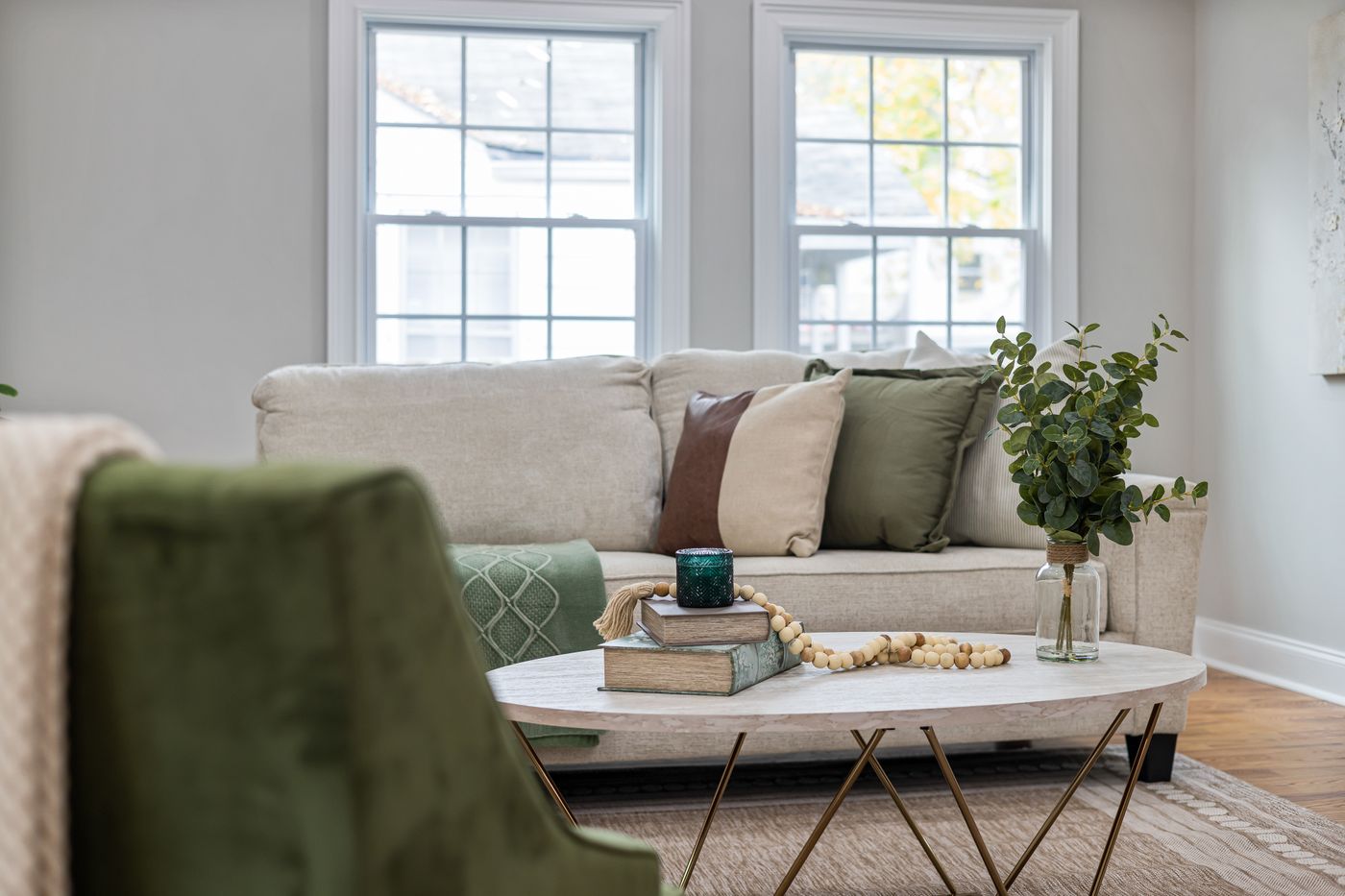
Textiles can connect mismatched existing finishes. A throw that repeats a warm tone from the floor and a cushion that relates to the curtains may create a more coherent room without exact matching. Limit the number of new colors so the property and the portable pieces feel connected. There is no need to disguise every fixed element. A neutral cabinet or an older door can become a quiet background once the furniture arrangement and lighting are resolved. Personal character often comes from a few clear choices, not from attempting to cover the entire rental's identity.
Avoid spending heavily on the wrong kind of permanence
Some changes are technically removable but still expensive to undo or unlikely to move well. Large amounts of temporary surface covering, highly specific shelving, or furniture built around a rental's awkward recess may offer poor value for a short stay. Compare the total cost, including preparation, removal, repairs, and disposal. Ask whether the same money could improve a portable item used every day. A comfortable chair may outlast several addresses; a decorative treatment designed for one unusual wall may not. The right choice depends on the expected stay and the household's priorities.
Do not use cosmetic treatments to conceal maintenance problems. Dampness, damaged electrics, unsafe fittings, and other defects should be reported through the appropriate channels and assessed properly. A renter's refresh is not a substitute for the landlord's responsibilities or for qualified work. Keep records of the property's condition and any agreed repairs according to the tenancy process. Clear documentation can also distinguish existing marks from later changes. A comfortable rental begins with a sound, usable environment; decorative work should build on that foundation rather than hide concerns that still need attention.
Plan the move out while the room is fresh
Keep original fittings, instructions, spare hardware, and approved change records together. Note which items belong to the property and which belong to the household. If furniture disassembles, retain the assembly information and label its parts sensibly. Store leftover paint or other materials only where safe and appropriate, following product guidance. A small inventory makes the eventual move easier and reduces the chance that a useful portable piece is damaged because nobody remembers how it was assembled. Reversibility works best when it is planned, not merely promised at the point of purchase.
Then allow the home to be lived in. A rental refresh does not need to anticipate every future floor plan or eliminate every imperfect finish. It should make the current days more comfortable while avoiding unnecessary commitments to the building. When the main purchases serve genuine routines and can adapt reasonably well, the money continues to have value after the tenancy ends. The room can feel settled without pretending to be permanent. A good chair, useful light, thoughtful storage, and familiar textiles often provide more belonging than an ambitious surface transformation.
Take it home
- Read the lease before making reversible changes.
- Prioritize portable pieces that solve everyday problems.
- Keep original fittings and written permissions together.