Begin with the room after dark
A room that works beautifully in daylight can feel oddly flat after sunset. One ceiling fitting may light the floor adequately while leaving faces in shadow, a reading chair dim, and a reflective screen full of glare. Adding brighter lamps does not necessarily solve the problem. Begin by listing the activities that happen after dark and where they happen. Reading, cooking, conversation, cleaning, and passing through a room need different kinds of illumination. A useful lighting plan gives those activities appropriate support rather than treating brightness as a single quality spread evenly everywhere.
Observe the room for a few evenings before buying fixtures. Notice which lights are used, which are avoided, and where people bring a task closer to a lamp. A chair that is always moved toward the window during the day may need its own evening light. A harsh reflection on a television may explain why a ceiling fixture is rarely switched on. These observations give the plan a practical basis. They also prevent a decorative purchase from becoming an expensive object that remains off because its light is uncomfortable in the actual room.
Think in layers without buying a formula
General light helps people move and understand the room. Task light supports a particular activity. Accent or ambient light can draw attention to a surface or make the evening feel softer. These are useful roles, not a requirement to buy three different fixtures for every corner. One source may serve more than one purpose, and a small room may need only a few carefully placed lights. The aim is to create useful combinations. A layered scheme should make the room easier to operate, not introduce an elaborate collection of switches that nobody remembers.
Map the main activities on a simple plan. Mark the sofa, reading chair, desk, dining table, worktops, and circulation routes. Then consider which areas need light at the same time. A living room might use a reading lamp and two softer sources during an evening, while cleaning requires a more general setting. This approach creates scenes based on ordinary use without depending on automation. If smart controls are desired, they should make those combinations more accessible and still provide a sensible way to operate the room when an app or connection is unavailable.
Put light where the task happens
Task lighting should illuminate the work without placing a bright source in the user's eyes or creating an obstructive shadow. A desk lamp needs to relate to the working hand, screen position, and available space. A reading lamp needs to reach the page from the actual chair, not merely look balanced beside it. Try an adjustable fitting where possible and assess it while seated. The useful position can differ from the most attractive arrangement in a photograph. Comfort comes from the relationship between the source, the person, and the task.
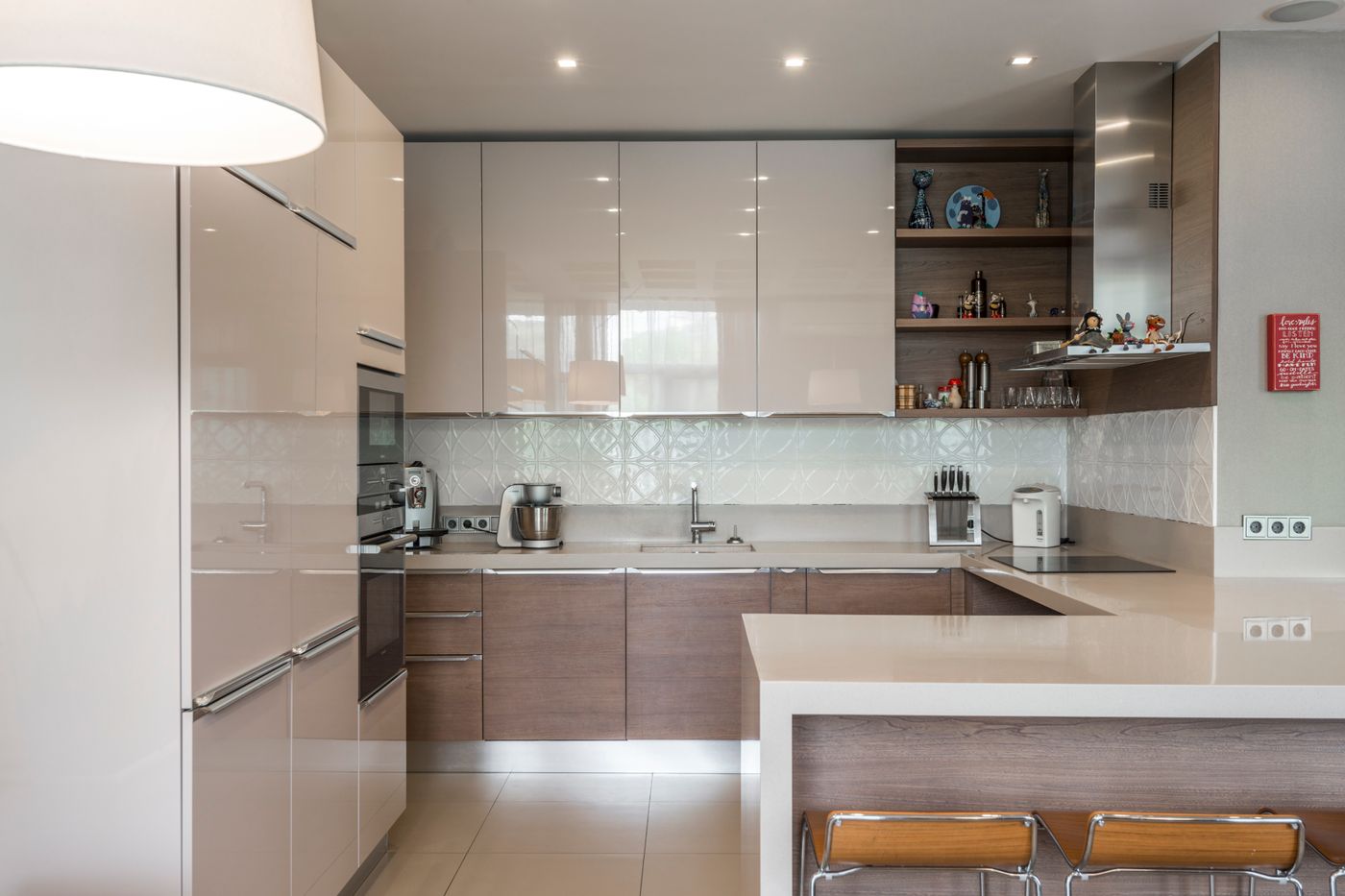
In kitchens and other work areas, have task lighting coordinated with the design and specified by a qualified professional where fixed installation is involved. A person standing between a ceiling light and a counter can cast a shadow exactly where detail is needed. The solution depends on the room and installation, so avoid placing fixtures only according to ceiling symmetry. Ask the designer or electrician how the working surfaces will be illuminated and how glare will be managed. A lighting plan should explain what the sources do, not just where their symbols appear on a drawing.
Control glare before increasing brightness
Glare can make a room uncomfortable even when the total light level seems reasonable. Bare lamps, exposed bulbs, shiny shades, and reflections on glass or screens all deserve attention. Sit in the normal positions and look around the room. Can you see a bright source directly through a shade opening? Does a mirror repeat it at eye level? A lamp that seems pleasant while standing may be distracting from a low sofa. Testing sightlines is often more useful than choosing a lower output bulb after the fixture has already been bought.
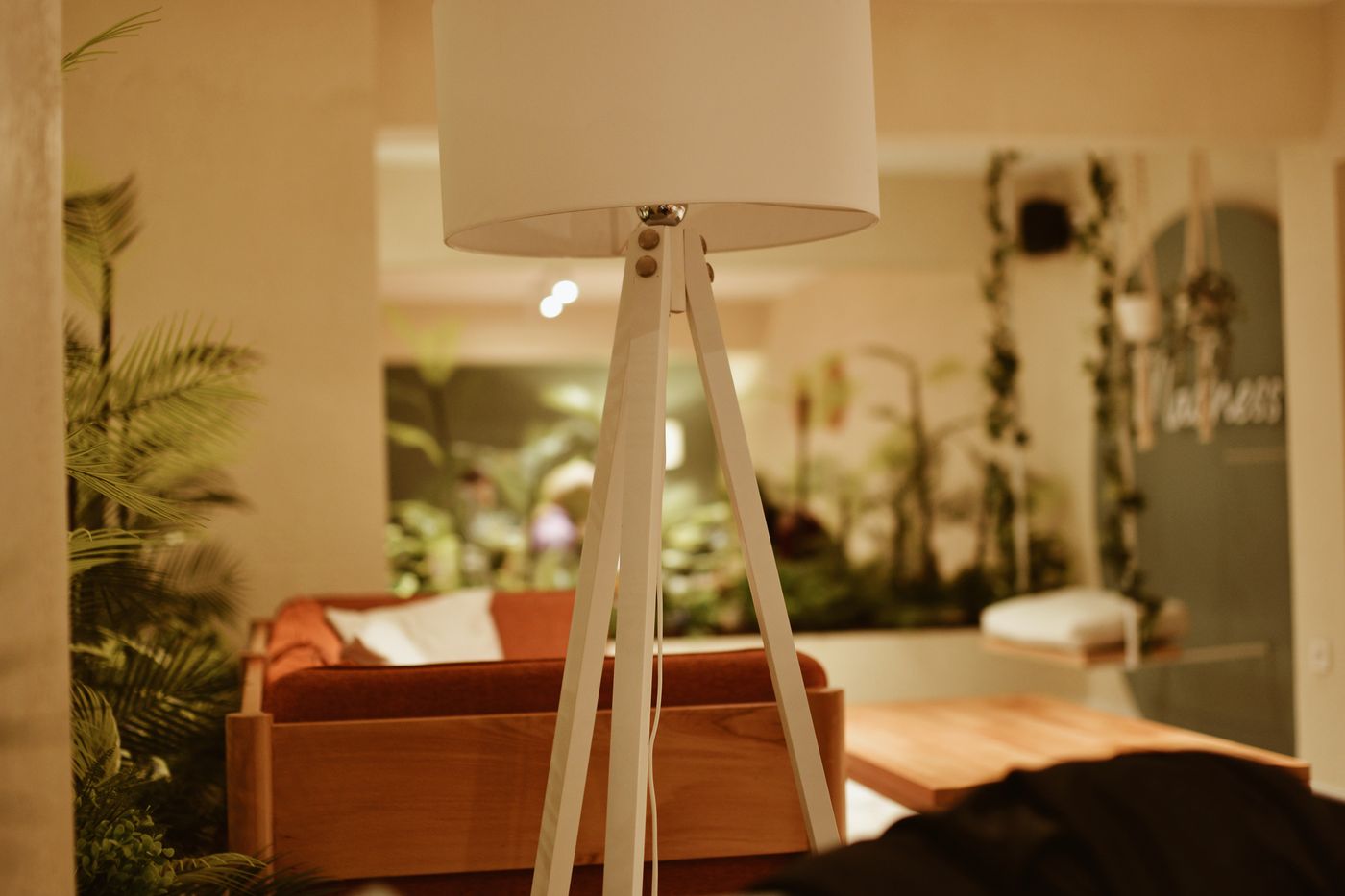
Shades and diffusers affect the quality of light as much as their decorative shape suggests. A dense shade may send most light upward and downward, leaving the surrounding area dim. A translucent one may glow broadly and become a prominent visual object. Choose the behavior needed in that location. If the lamp sits near a television, reflections matter; beside a chair, the angle of the opening may matter more. Follow the fixture's specifications for compatible lamps and maximum ratings. Do not improvise a bulb or fitting arrangement to achieve a visual effect.
Choose a coherent color of light
Different light sources can make the same paint or fabric appear inconsistent across a room. A cool overhead source beside a much warmer table lamp may create an unintended patchwork. This can be useful in some settings, but it should be a choice rather than an accident. Compare the proposed lamps together in the room and inspect their stated color characteristics. Product descriptions such as warm or soft are broad, so check the actual specification. Also remember that the shade and surrounding surfaces can affect how the light is perceived.
Color quality matters where materials and faces should look natural. Two lamps described with the same color temperature may still render colors differently. Ask a knowledgeable supplier or lighting professional about suitable products and compare them in person when possible. In a room with carefully chosen wood and textiles, poor color rendition can make the palette feel dull or strange. The answer is not necessarily to make every source brighter. It is to choose compatible, appropriate sources and test the whole arrangement under the conditions in which it will be used.
Give the evening a lower register
A room often benefits from being able to feel quieter without becoming difficult to navigate. Table lamps, wall lights, or a carefully aimed source can provide that option, depending on the room. Lower visual emphasis can make a large space feel more intimate and allow textured materials to show gentle shadows. Keep circulation safe and avoid leaving important changes in level or obstacles poorly visible. A softer setting is useful when it supports comfort and orientation together, rather than creating a dramatic pool of light surrounded by awkward darkness.
Dimming can help, but compatibility needs checking. Lamps, drivers, dimmers, and control systems must work together as specified, and fixed electrical work belongs with a qualified professional. Ask about the usable dimming range and whether the system has been selected as a compatible set. Flicker, buzzing, or abrupt changes are not details to accept simply because the room looks attractive in a still image. If dimming is not practical, several separately controlled sources can still create useful choices. The everyday operation matters more than the sophistication of the product list.
Light surfaces, not only empty air
Walls, curtains, shelves, and ceilings influence how a room feels because they form much of the visual field. A well placed source can give a wall depth or reveal the weave of a curtain, helping the room feel more complete without adding objects. Think about what the light will land on. Illuminating a cluttered shelf may emphasize clutter rather than create atmosphere. A reflective surface can redirect light in an unexpected way. Test the relationship in place and adjust the arrangement before assuming an extra fixture is needed.
Artwork needs particular care. Not every object benefits from strong illumination, and sensitive materials may be affected by exposure. Seek suitable advice for valuable or delicate pieces. Avoid directing heat or excessive light at an object simply to make it stand out. In an ordinary room, the artwork can often be enjoyed as part of the broader lighting composition rather than treated like a display in a gallery. The room should remain comfortable for people, with decorative emphasis serving the overall atmosphere rather than competing with it.
Make switches understandable
The best lighting combination is of little use if operating it is frustrating. Place controls where the people using the room can reach them comfortably, with the technical design handled appropriately. Think about entering, leaving, sitting down, and going to bed. A lamp behind a sofa may be attractive but inconvenient if its switch requires a daily reach over furniture. Plug locations and safe cable routes should be considered early. Do not rely on trailing leads across circulation paths or improvised connections to make a decorative plan function.
Keep the control logic simple. Group lights that are normally used together while preserving separate control where it adds genuine flexibility. If several switches are needed, a clear arrangement or discreet labeling can help visitors and household members. Smart systems should have a straightforward local control method and an understood maintenance process. Ask how settings are restored after a power interruption and how replacement lamps are specified. A lighting scheme becomes part of the home only when it can be used naturally, without requiring the person entering the room to remember a technical routine.
Test the room in real combinations
Before treating the plan as finished, use the room with the actual furniture and several everyday settings. Read in the chair, sit at the table, watch a screen, and move through the space carrying something. Check for glare, shadows, and inconvenient controls. A temporary plug in lamp can help explore a position, provided it is used safely and according to its instructions. Fixed changes should be reviewed with the appropriate professional. The final adjustment may be a shade, an angle, or a lamp specification rather than another fixture.
Keep a record of the selected lamps, ratings, color characteristics, and control requirements so replacements preserve the intended result. Lighting is easy to dilute over time when a failed lamp is replaced with whatever is available. A good plan remains legible: enough light for the task, comfortable surroundings, a quieter evening option, and controls that make sense. It does not need every corner to glow or every surface to be highlighted. The room feels resolved when people can do what they need and then settle comfortably into the light that remains.
Take it home
- Assess glare from seated positions.
- Plan controls and safe cable routes alongside furniture.
- Use qualified professionals for fixed electrical work and compatibility checks.