Measure the meal, not just the tabletop
A small dining table succeeds when the people around it can eat, move, and talk comfortably. Its listed width and length tell only part of that story. Chairs extend beyond the edge, people need to approach them, and the route through the room may pass behind a seated diner. Begin with the arrangement in use rather than with the table neatly tucked away. Mark the proposed tabletop on the floor and place the actual chairs around it if possible. Pull them out as someone would when sitting down, then walk the nearby routes.
Think about the meals that happen most often. A table for two people eating simple suppers has different demands from one used for family meals, homework, or shared dishes. A compact surface may work beautifully when food is served from a sideboard, yet feel crowded when every serving bowl must sit between the plates. List those ordinary objects before deciding what generous means. The goal is not to fit the largest possible top into a small room. It is to provide enough usable surface while preserving a comfortable relationship with the room around it.
Choose shape by the room's movement
Round tables remove corners and can make conversation feel easy, but they are not automatically the smallest option. Their occupied footprint grows in every direction, and the base still affects legroom. A square table can sit neatly in a compact area but may feel rigid if the surrounding routes are irregular. A narrow rectangular table can work well along a room's length, provided the chairs do not block the main passage. Compare shapes using the full arrangement. A drawing of the top alone can make several options appear equally practical when they behave quite differently in use.
An oval or softly rounded rectangle may offer a useful middle ground, combining a longer surface with less abrupt corners. The exact benefit depends on dimensions and chair positions rather than the shape's name. In a hypothetical apartment where the dining area lies between the kitchen and sofa, a rounded end might ease one passing route without increasing the table's central width. Test that specific relationship. Avoid choosing a form because it is described as ideal for small spaces. Small rooms have different proportions, doors, and circulation patterns, so their best tables differ too.
The base determines how people fit
A tabletop can look spacious while its legs make seating awkward. Corner legs may restrict the position of chairs, stretchers can interrupt feet, and a central pedestal can reduce room for knees depending on its shape. Sit at the actual table where possible and move the chair into a natural position. Check whether the base allows the intended number of people to use the table comfortably. Marketing capacity often assumes a particular seating arrangement and may not reflect the chairs or meal habits in your home.
Pedestal bases can offer flexible chair placement, but their footprint and stability still need assessment. A broad base may occupy the floor where feet want to rest. A visually light leg arrangement may be attractive yet create conflicts with wider chairs. Ask about the table's intended use and follow the manufacturer's guidance. Do not judge stability by appearance alone or modify a base to create more clearance. The relationship between top and support is part of the product's design. A compact table should feel dependable in ordinary use, not merely look as though it takes up little space.
Pair the table with the actual chairs
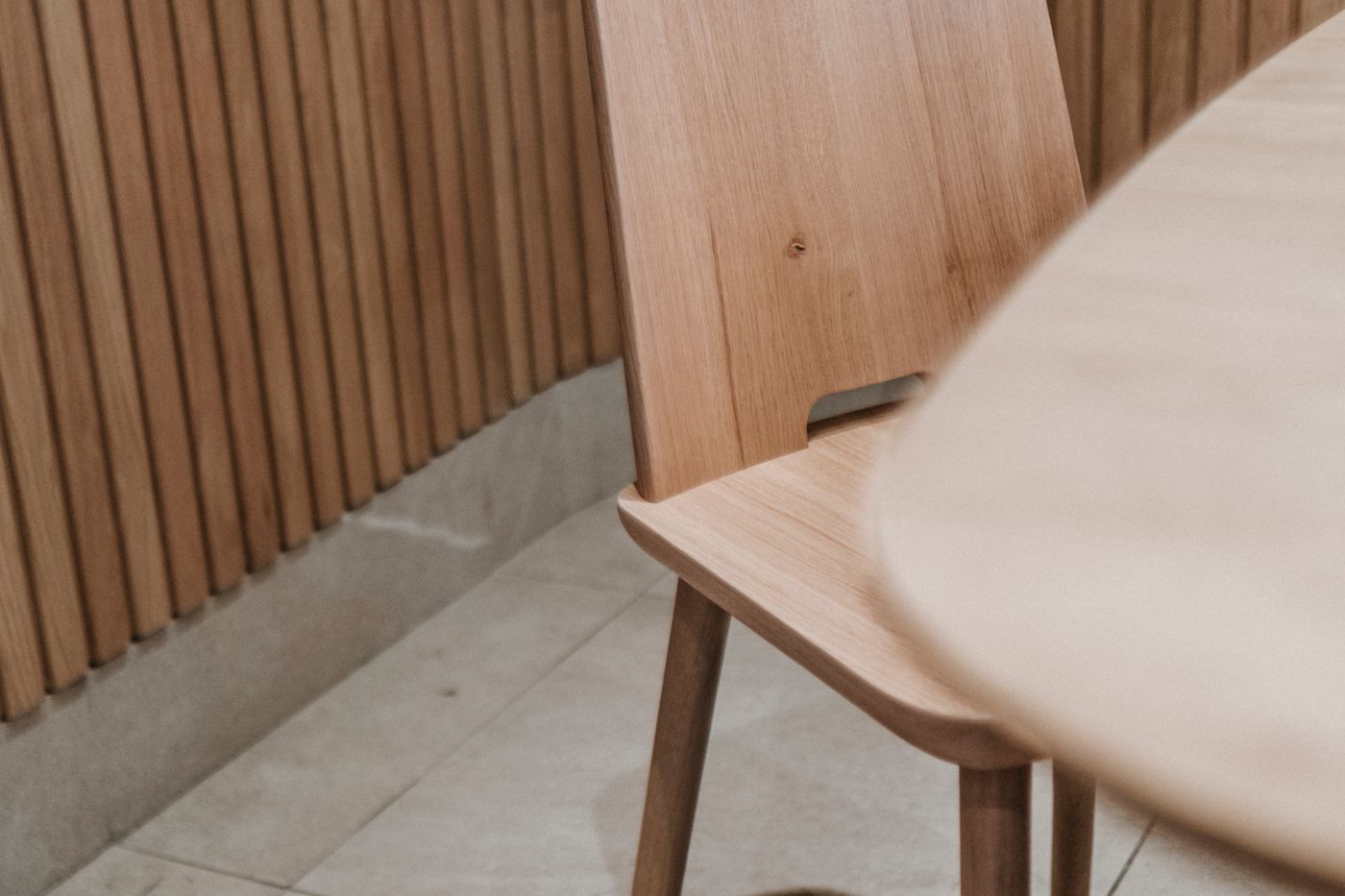
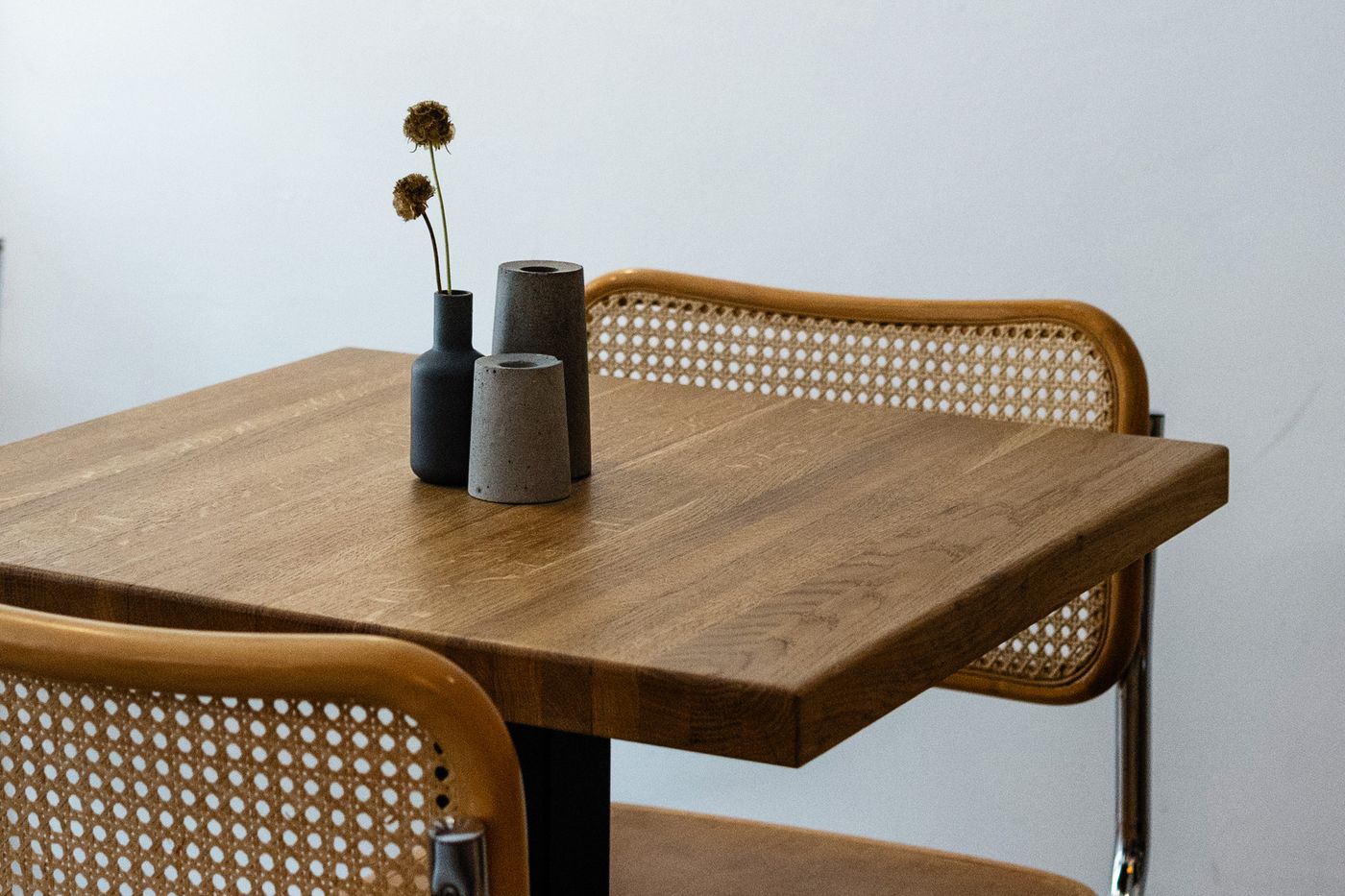
Chair width, arm height, seat depth, and back shape all affect a small dining area. A generous upholstered chair can make a modest table feel cramped even if the tabletop dimensions are reasonable. A slim chair may tuck away easily but be uncomfortable for the length of meals you enjoy. Test the pair rather than buying each independently. Check whether arms fit beneath the top or apron and whether the chair can be drawn close enough for a comfortable eating position. The underside of the table matters as much as the visible edge.
Mixing chairs can be appealing, but a compact room benefits from a clear logic. Similar visual weight or a repeated material can keep different designs coherent. Benches may save space in some arrangements, yet they also change access: a person in the middle may need others to move. A bench is not automatically more efficient simply because it lacks a back. Consider who uses it, how long they sit, and how easy it is to get in and out. Comfort and access should remain visible in the decision rather than be sacrificed for a photograph of neatly tucked seating.
Treat extension as a complete routine
An extending table can be valuable when occasional guests would otherwise require a much larger everyday footprint. But the mechanism, leaf storage, and expanded circulation all need to work. Ask to see it operated and try the process if possible. Does it require two people, and is that realistic? Where are separate leaves kept, and can they be reached without emptying a cupboard? A table that is theoretically adaptable but troublesome to extend may remain permanently closed or open, defeating the reason it was chosen.
Mark the expanded footprint in the room and place all the intended chairs around it. Check routes to doors, kitchen cabinets, and nearby furniture. Occasional use can tolerate some rearrangement, but decide what that rearrangement actually involves. Moving a light side table is different from shifting a large sofa every time guests arrive. Also inspect how the extended top and base relate: additional length does not always create equally useful seating at every position. The extension should solve a real hosting need without making the ordinary room unnecessarily complicated.
Drop leaves and wall related options
A drop leaf table can provide flexibility in a narrow room, with one side folded for daily use and raised when needed. Its success depends on how the supports operate and how the folded section affects legroom. Ask to see all approved configurations and check stability in each intended position. A compact closed outline can conceal a bulky understructure. Consider the appearance from the side as well as above, since the folded leaves may be visually prominent in the room. The practical mechanism is part of the furniture's character, not something to ignore until it arrives.
Wall mounted or folding solutions require careful suitability and installation checks. Follow the manufacturer's instructions and have the wall and fixing method assessed by a suitable professional. Obtain permission where required in a rental. Do not assume an apparently solid wall can support a particular product without verification. Also think about the objects that must be moved before the table folds away. If daily storage depends on clearing a complicated arrangement, the table may remain open. A simple freestanding option can sometimes be more comfortable than a clever mechanism that adds a repeated chore.
Choose a surface for the way the table is used
A dining table may also be a desk, craft surface, or place to sort shopping. Choose the finish with those activities in mind and read the exact care instructions. Natural wood, veneer, laminate, stone, and other surfaces have different requirements, and construction changes their behavior. Ask about heat, moisture, staining, scratching, and repair rather than assuming a material category tells the whole story. A compact table often receives concentrated use because there is no spare surface. Its maintenance needs should fit the household's willingness to protect and clean it.
Visual lightness can help a small area, but it should not override practical preferences. A pale finish may blend with the room, a darker top may provide a useful anchor, and a reflective surface may repeat clutter or lighting. Compare samples under the actual light. If choosing glass, assess the product's safety information, edge treatment, and everyday cleaning implications. Do not treat transparency as the same thing as taking up no space. The base and chairs remain visible, and reflections can make the arrangement more visually active than expected.
Let lighting and storage support the table
A compact dining area feels more generous when the table does not have to carry everything. Nearby storage for serving dishes, paperwork, or frequently used objects can keep the surface available. A small sideboard may be more useful than increasing the tabletop if the room can accommodate it without crowding circulation. Identify what currently accumulates on the table and give it a realistic alternative home. The furniture arrangement should make clearing for a meal easy, rather than depend on a daily search for somewhere to move a pile.
Lighting helps define the dining area, especially within a larger room. A pendant, wall light, or other suitable source should relate to the table's position and the people seated around it. Avoid glare and have fixed electrical work designed and installed by a qualified professional. If the table moves or extends, discuss how the lighting will serve its different arrangements. A decorative fixture centered on the room may not feel centered on the meal. The most useful plan considers the table, chairs, storage, and light as one small working environment.
Choose the ordinary setting first
Before ordering, return to the table's daily configuration. Can the usual number of people sit comfortably, can someone pass, and is there enough surface for the meals you actually make? Check the return policy, delivery route, and assembly requirements. A table that is perfect for an imagined dinner party but irritating every evening is a poor compromise. Occasional capacity matters, but it should be balanced against the many days when the room needs to work at its normal scale.
The best small dining table does not pretend to be large. It uses its dimensions intelligently, with a base that leaves useful room, chairs that fit comfortably, and a surface suited to daily use. If it extends, the process is practical. If it remains fixed, the room around it provides enough flexibility for ordinary life. A considered choice can make a compact dining area feel welcoming because nothing is fighting for the same few centimeters. Generosity comes from ease of use and clear relationships, not from the largest top the floor plan can technically contain.
Take it home
- Test the occupied footprint with chairs pulled out.
- Inspect legroom and the underside, not just the tabletop.
- Try the full extension routine before relying on occasional capacity.