Give the chair a reason to be there
An accent chair is often introduced as the piece that adds personality to a room. That can be true, but personality is a weak substitute for a clear purpose. Decide who will sit in it and what they will do. A chair used for long reading sessions needs different support from one used briefly when guests visit. A seat beside a window may be turned toward a view, while one in a conversation group needs to relate comfortably to the sofa. The role should guide the dimensions and shape before a striking color or silhouette makes the decision for you.
Look at the room's existing seating. Perhaps the sofa is deep and relaxed, and an upright chair would offer a useful alternative. Perhaps every seat faces a screen, and a movable chair could make conversation easier. A chair can also complete an awkward corner, but filling an empty space is not enough on its own. The location needs a comfortable approach, a useful view, and often a nearby surface or light. If the seat is isolated from the room's activities, it may become a place for folded laundry regardless of how attractive it looks.
Test comfort in your normal posture
Sit in the chair for more than a brief moment if possible. Place your feet naturally, lean back, and notice the relationship between seat depth, height, and back support. Personal proportions matter, so a chair praised as comfortable may not suit everyone. A deep seat can feel generous to one person and leave another perched forward without support. If the chair will be shared, invite the main users to try it. Cushions can adjust a fit slightly, but they should not be asked to rescue a fundamentally unsuitable shape.
Consider how you get in and out. Low lounge chairs can be visually inviting yet less convenient for some users. Arms can help with support, but their height and shape affect the experience. If specific mobility or access needs apply, seek advice appropriate to the person rather than relying on a general furniture description. A chair used every day should support the body without a sequence of adjustments. Comfort is not merely softness; it includes stable support, a usable posture, and an easy transition between sitting and standing.
Scale is more than the chair's width
A chair's visual size depends on its back, arms, base, and surrounding space. A narrow chair with a tall solid back may feel more dominant than a wider one on an open frame. A bulky upholstered form can make a compact room feel crowded even when its footprint fits. Mark the proposed dimensions on the floor and include the back height in a simple sketch or temporary outline. View it from the doorway and the sofa. The chair should have enough presence to belong without blocking the room's main sightlines or circulation.
Think about the space occupied while someone is sitting. Knees, feet, and any reclining mechanism extend beyond the catalog footprint. A swivel chair needs a suitable operating area, and a recliner requires the clearances specified by its manufacturer. Check nearby tables, curtains, and routes in the full range of intended use. Do not assume a movable chair will always be pushed back into a perfect position. The room should remain workable when the seat is being used naturally, not only when everything has been arranged for a photograph.
Relate the chair to the conversation
In a seating group, orientation can matter as much as distance. A chair squarely facing the sofa may feel formal, while a slight angle can make the arrangement more relaxed. The right position depends on the room, views, and activities. Try several positions with an existing chair before buying if possible. Notice whether conversation feels easy and whether someone must turn awkwardly to see the others. A chair that is technically part of the group can still feel excluded if a large table or circulation route separates it from the main seating.
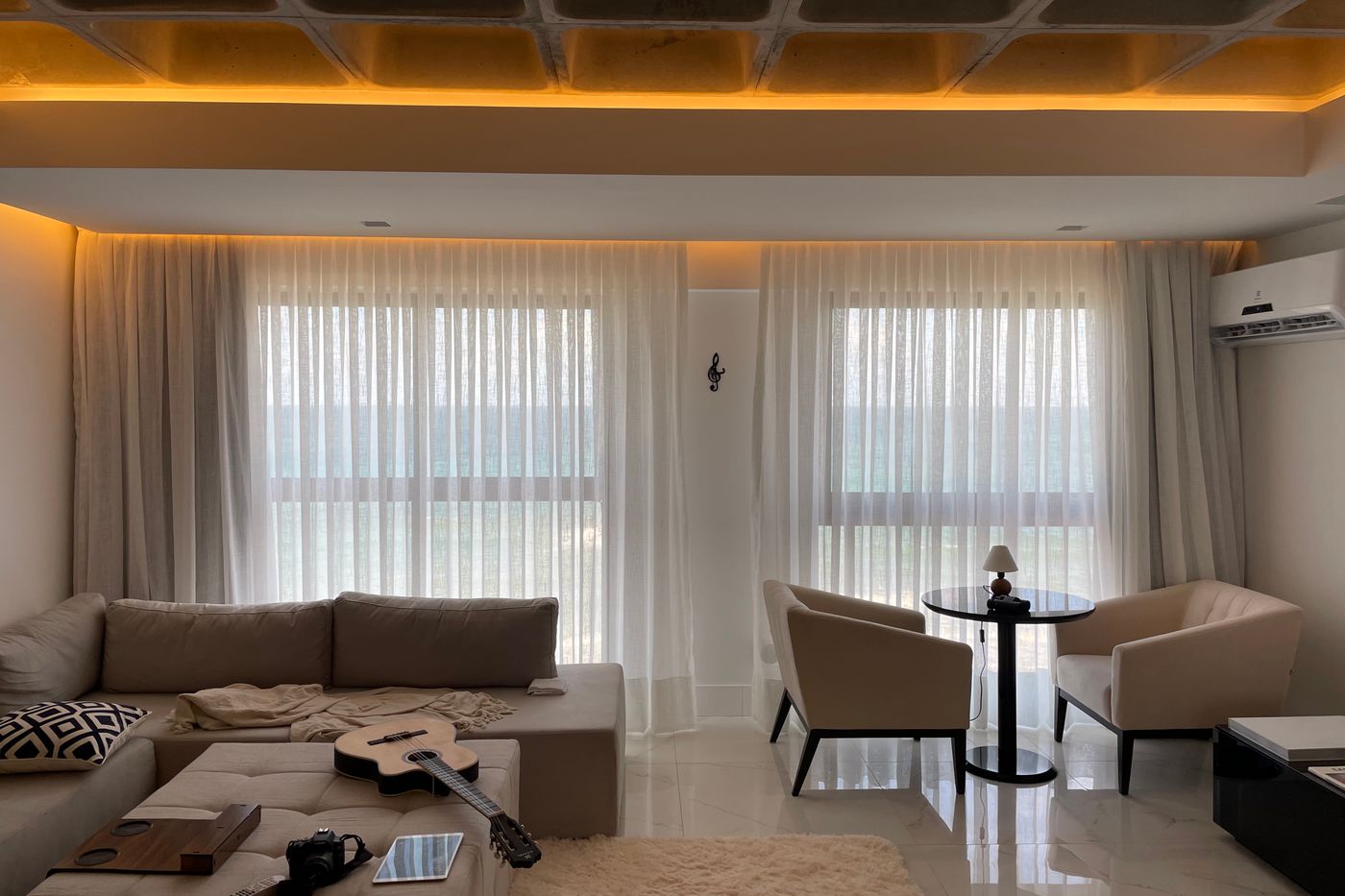
Give the chair access to a surface when the role needs one. A small table within comfortable reach can make the seat useful for reading or a drink. Its height should relate to the chair's arms and the user's reach, not only to the neighboring sofa. Lighting also needs to support the position if the chair is intended for evening use. These additions should not become obstacles. A useful corner has a clear relationship between seat, table, light, and route, with enough simplicity that the chair remains easy to approach and use.
Choose the amount of contrast deliberately
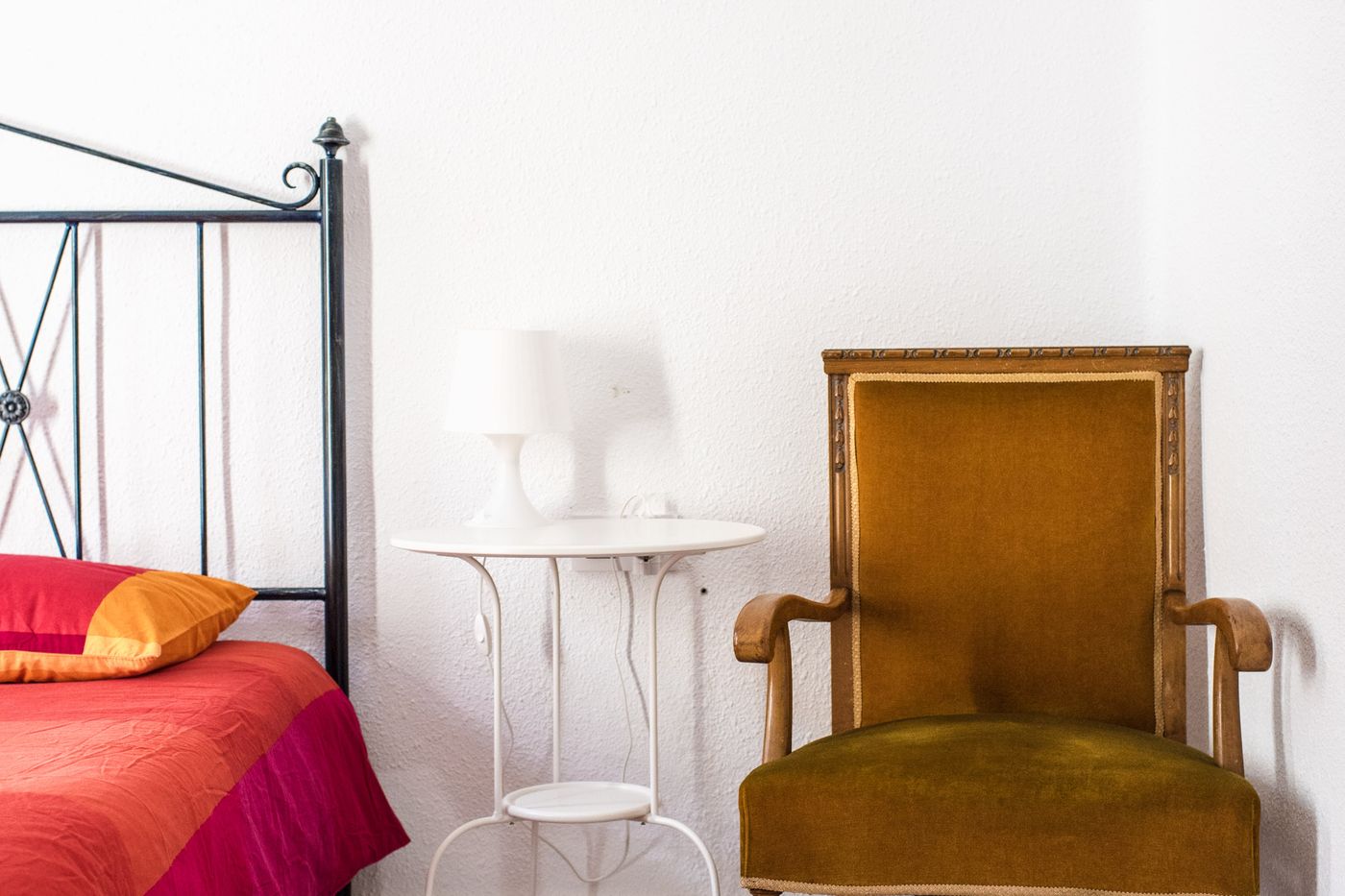
An accent chair does not have to be the brightest object in the room. It can provide contrast through shape, material, or scale while staying within the existing palette. A timber framed chair beside a fully upholstered sofa may introduce enough difference without a new color. A curved back can soften an arrangement of straight lines. If the chair is strongly colored or patterned, let nearby surfaces offer some visual quiet. A focal point works best when the room gives it a clear role rather than surrounding it with several equally assertive details.
Bring upholstery samples into the room and compare them with the sofa, rug, curtains, and floor. A color that looks rich in isolation may feel disconnected when seen across the complete arrangement. Repeat a related tone elsewhere only if it helps; buying matching cushions is not a requirement. The connection can come from warmth, texture, or a similar level of contrast. Ask what the chair contributes that the room lacks. That question often produces a more individual result than trying to match an existing furniture suite or create a statement at any cost.
Upholstery should fit the chair's working life
A chair in a busy family room needs a different care balance from one in a quiet bedroom. Read the fabric and construction information for the exact product. Ask about cleaning, removable covers where available, expected wear, and any restrictions. A textured cloth may hide small marks but catch on jewelry or claws. A smooth pale fabric may show use more readily. These are tradeoffs to consider, not reasons to rank one material as universally superior. The right upholstery is the one whose comfort and maintenance fit the chair's actual role.
Look at how the fabric is applied. Seams, piping, buttoning, and cushion edges affect both appearance and use. A prominent seam may be uncomfortable in a particular sitting position, while a loose cushion may need regular adjustment. Pattern placement becomes important on curved or divided forms. Ask to see representative product photographs and samples, and understand the return terms for a custom fabric order. A made to order chair can be a considered investment, but it should be based on a tested shape and a fabric you understand rather than a small swatch and a hopeful assumption.
An open frame changes the room differently
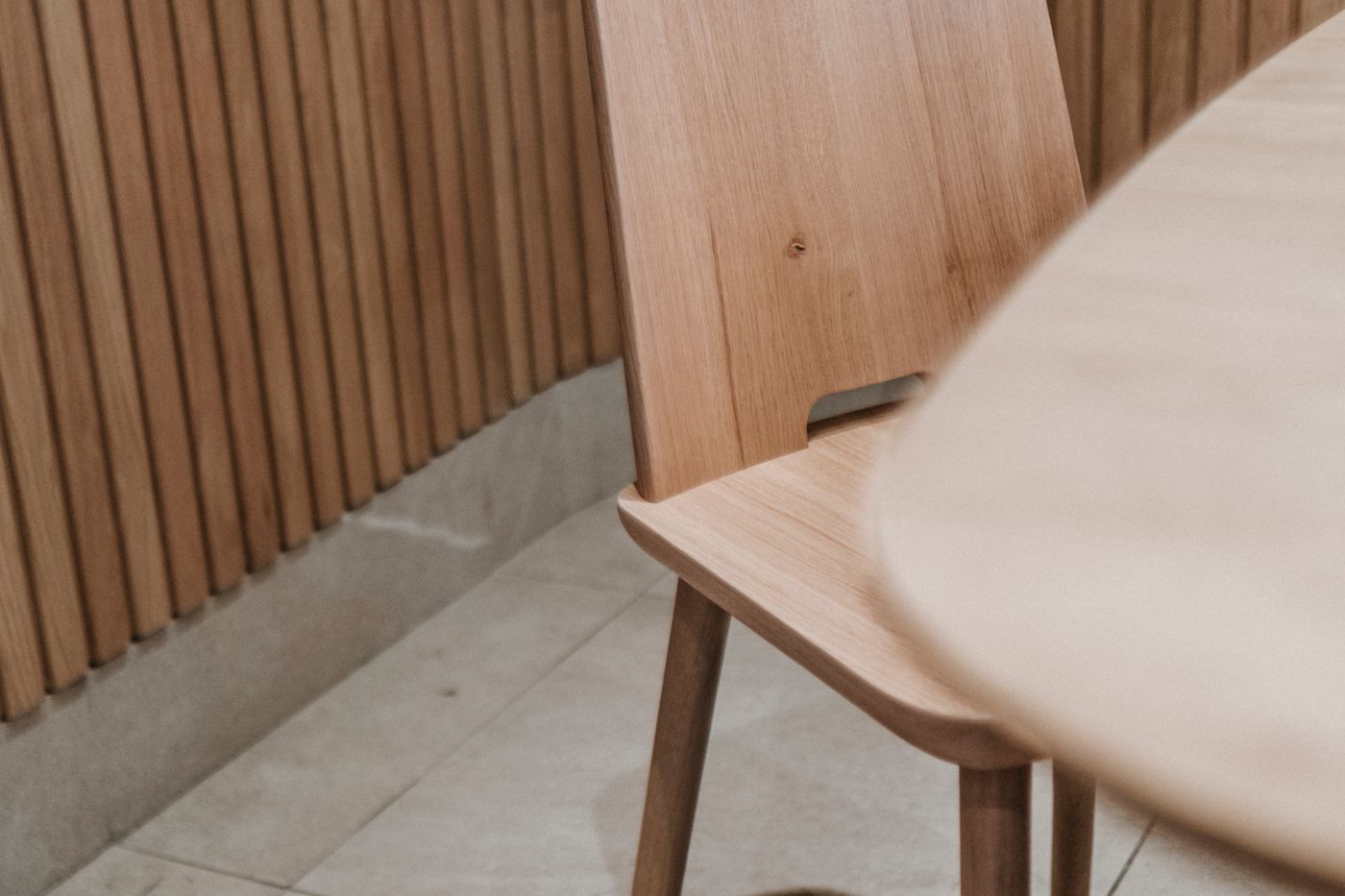
Chairs with visible timber or metal frames can feel lighter because the floor and wall remain visible through them. That can help in a small room, but the frame becomes an important material in the palette. Compare its tone and finish with nearby wood and metal rather than assuming natural materials always coordinate. A frame may also change comfort where the arms or back meet the body. Try the actual contact points. Visual openness is useful only if the seat remains pleasant enough to choose over the sofa.
Fully upholstered chairs can feel more enclosed and substantial. They may provide a stronger anchor or a comfortable sense of shelter, depending on the design. In a room with several large upholstered pieces, adding another solid form may make the arrangement heavy. An open frame could provide a useful change. Conversely, a room full of delicate legs may benefit from one more grounded seat. Judge the distribution of visual weight across the whole room. The chair's contribution is relational; the same piece can feel light in one setting and dominant in another.
Check the practical journey and terms
Measure the delivery route, including doors, stair turns, lifts, and the final approach to the room. Ask for packaging dimensions and whether removable parts can be taken off by the delivery team as intended by the manufacturer. Do not assume a chair is easy to deliver simply because it is smaller than a sofa. A wide rigid frame can be awkward in a narrow turn. Confirm what the delivery service includes and whether assembly or placement is part of the arrangement. These checks are easier before an order becomes difficult to cancel.
Read the return policy and understand differences between stock and custom products. If trying the chair at home is permitted, keep the packaging and follow the stated conditions. Test it in the actual role rather than only admiring it from across the room. Read for a while, place a drink on the side table, and see whether the chair's position remains useful during ordinary activity. A good return policy is not a substitute for careful selection, but it can provide room to assess the relationship that a showroom cannot fully reproduce.
Let the chair become part of the household
Once the chair arrives, resist styling it so heavily that it becomes inconvenient to use. Several cushions and a carefully draped throw may look inviting but require moving before anyone can sit. Add only what improves comfort or gives the room a needed material note. Adjust the angle and nearby table after a few days of use. Small changes can make a seat feel much more integrated. If nobody chooses it, investigate the practical reason before assuming it needs another decorative accessory.
The right accent chair brings a useful difference to the room. It may offer a more upright seat, a favorite place to read, or a flexible position for conversation. Its shape and material can add character, but those qualities become more convincing when the chair is regularly used. A successful choice does not need to announce itself as the room's statement piece. It earns its space through comfort, proportion, and a clear relationship with the furniture around it, then gradually becomes one of the places people naturally choose to sit.
Take it home
- Choose the chair's role before its statement color.
- Test seated comfort and getting in and out.
- Include occupied and moving clearances in the room layout.